

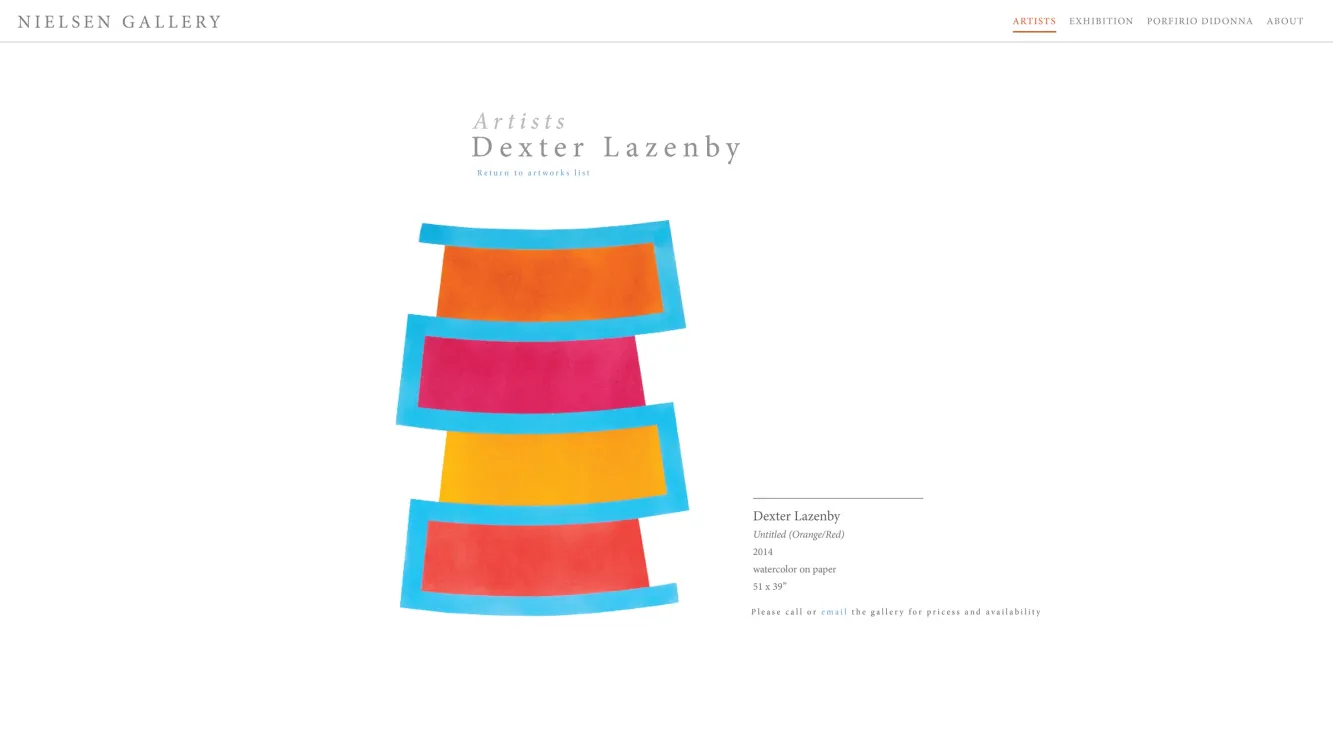
- Nielsen Gallery Web Home Page, c. 2015
- Screenshot of Website
- Artwork by Dexter Lazenby
- Web Design by Alex Stevovich
I developed and maintained the website for Nielsen Gallery during its transition to an appointment-based model without a traditional storefront. As the gallery shifted away from a permanent public exhibition space, the website became a primary platform for presenting artists, available works, and curated digital exhibitions.
The platform supported artists, artwork inventory, exhibitions, and events, while also incorporating an editorial layer for publishing digital exhibitions accompanied by curatorial essays. The website functioned not only as a catalogue, but as an active exhibition environment.
Scope of Work
- Website architecture and system design.
- Front-end development (HTML, CSS, JavaScript).
- Server-side application development (PHP).
- Responsive layout implementation.
- Artist, artwork, and exhibition data structuring.
- Ongoing content updates and exhibition launches.
- Integration of promotional and exhibition design materials into the web system.
- Development of digital exhibition formats and virtual walkthrough concepts.
- Ongoing site maintenance and technical oversight.
Design Approach
The site was designed in a restrained, traditional gallery format. The artwork varied significantly in style and period, including historically important works as well as contemporary pieces. The interface therefore needed to remain neutral and adaptable. I chose a clean, minimal structure that allowed the artwork to remain the focus.
Data-Driven
The site was structured around a data-driven system, which was essential for presenting the substantial body of artists, exhibitions, and individual works represented by the gallery. Careful attention was given to a consistent display that would suit the wide range of artwork shown by the gallery.
The site included configurable areas for current exhibitions, featured events, and gallery announcements. These sections were structured and data-driven, but they also allowed for fully custom HTML layouts when an exhibition required a distinct presentation.
Digital Exhibitions
Online exhibitions were an essential component of the gallery’s web strategy. A structured editorial framework was developed to support exhibition essays and curated selections of artwork, presented in an art-book-like layout combining text, images, and captioned works in deliberate sequence.
Certain exhibitions required distinct presentation approaches. In those cases, custom components were developed to support varied virtual exhibition formats and to articulate relationships between artworks in ways that extended beyond a standard listing structure.
Navigation
Primary site categories were presented through structured header and footer navigation. On mobile displays, navigation collapsed into a toggleable side panel designed to preserve clarity and direct access to artists and exhibitions.
SEO (Search Engine Optimization)
Structured metadata, including Schema.org markup, was implemented across relevant page types such as artist, artwork, and exhibition entries. Semantic HTML, descriptive metadata, and logical pagination were used to support search indexing and discoverability. The site architecture supported both human navigation and search engine crawlability.
Accessibility
The site was developed with attention to accessibility standards. Clear semantic structure, descriptive image metadata, and consistent navigation patterns were prioritized to ensure ease of use across devices and assistive technologies.
Technical Approach
The site was built using PHP with server-rendered HTML, which aligned with the operational needs and infrastructure of the gallery at the time.
Artwork Attribution
The artworks shown on the website were exhibited by the gallery and remain the property of their respective artists and rights holders.