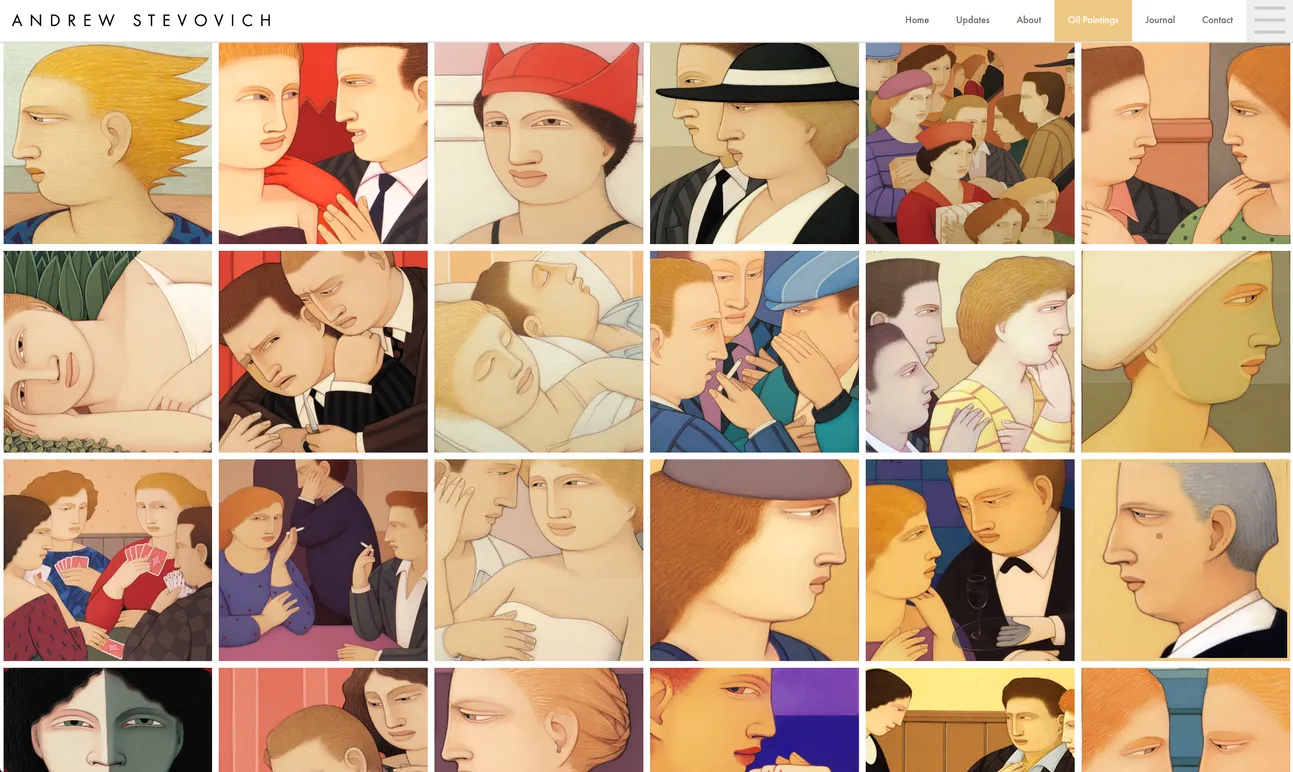
Service Overview
I build comprehensive digital catalogue raisonné systems for artists, estates, studios, and institutions. These systems combine relational databases, searchable archives, publication integration, and high-fidelity presentation.
The goal is to create a permanent, structured digital record with museum-grade organization and long-term sustainability — suitable for both living artists and legacy estates.
Origin
This platform began as a personal project. I created it to manage the lifelong body of work of my father, the painter Andrew Stevovich — a prolific artist with hundreds of works spanning decades.
What began as a family archive became a fully engineered digital catalogue raisonné system: complete, relational, elegant, and built to museum standards. It now serves as the backbone of comprehensive catalogue raisonné which has evolved into a product solution.
Adaptation
Today, I adapt this system for other artists and estates, customizing it to the needs of each body of work.
I design structure, taxonomy, artwork records, publication references, image processing pipelines, search tools, and long-term data stewardship. Each implementation is handcrafted, scalable, and designed to function as a permanent historical resource.
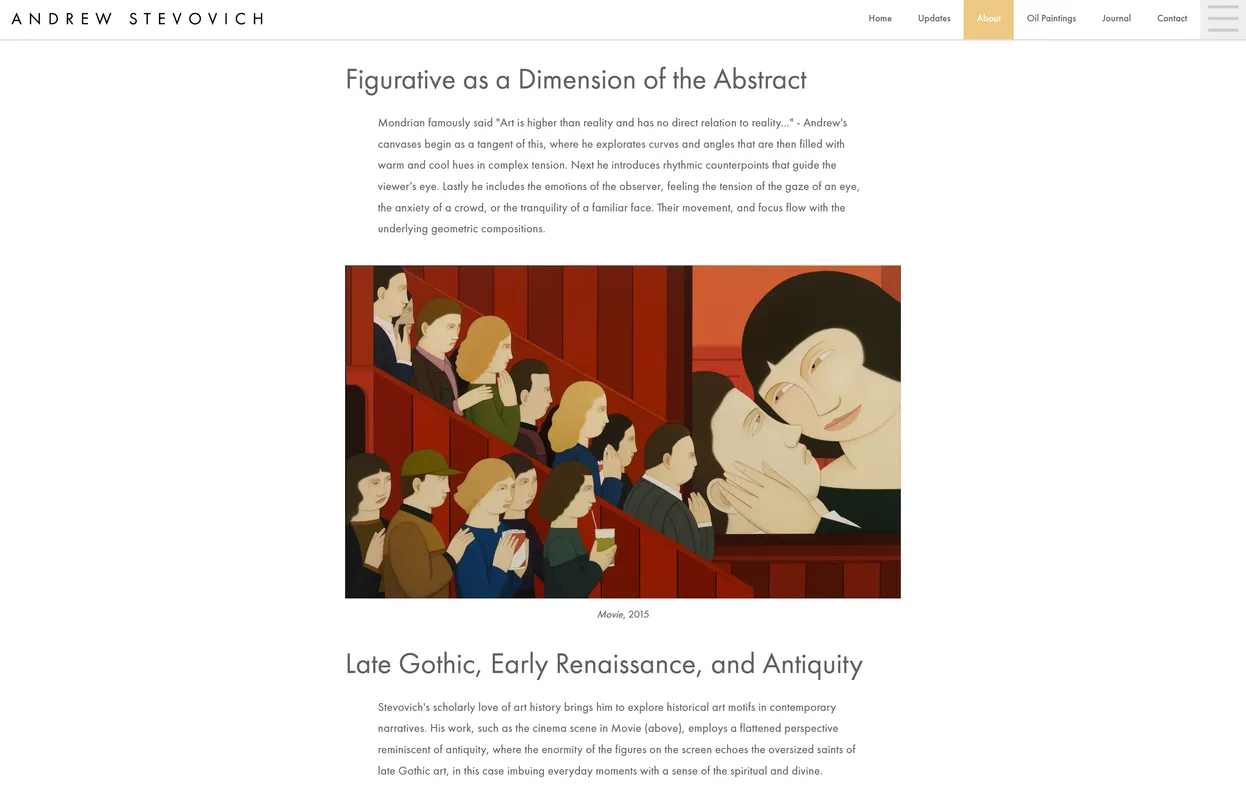
- Andrew Stevovich Website — About Page
- Client: Andrew Stevovich
- Visit figure page
Presentation & Fine-Art Layout
Each catalogue raisonné installation receives the full depth of my fine-art layout expertise. These platforms are designed with the same clarity, restraint, and visual discipline used in museum publications and exhibition graphics.
Artwork is presented with dignity: clean hierarchy, elegant typography, balanced spacing, and image handling that shows each piece in its best possible light.
This blend of aesthetic sensitivity and technical architecture is a core advantage of my work — combining the eye of a fine-art designer with the precision of a systems engineer.
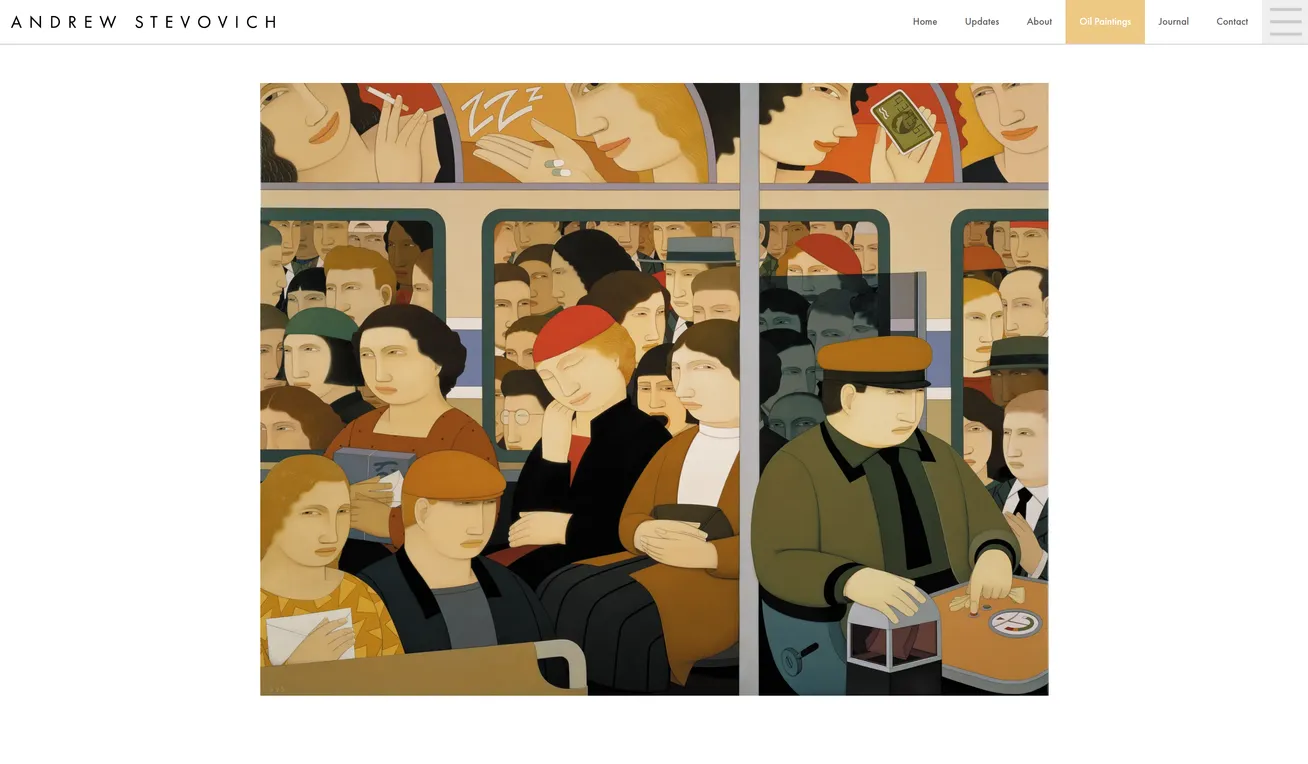
- Andrew Stevovich Website — Artwork Page
- Client: Andrew Stevovich
- Visit figure page
Technical Foundation
At the core of the system is a relational database that allows artworks, exhibitions, publications, drawings, writings, archival material, and biographical data to interconnect seamlessly.
Each artwork can display related studies, exhibitions, publications, and writings, giving viewers a fully informed, academically structured view of an artist’s career — supported by clean hierarchy, powerful search tools, and refined visual presentation.
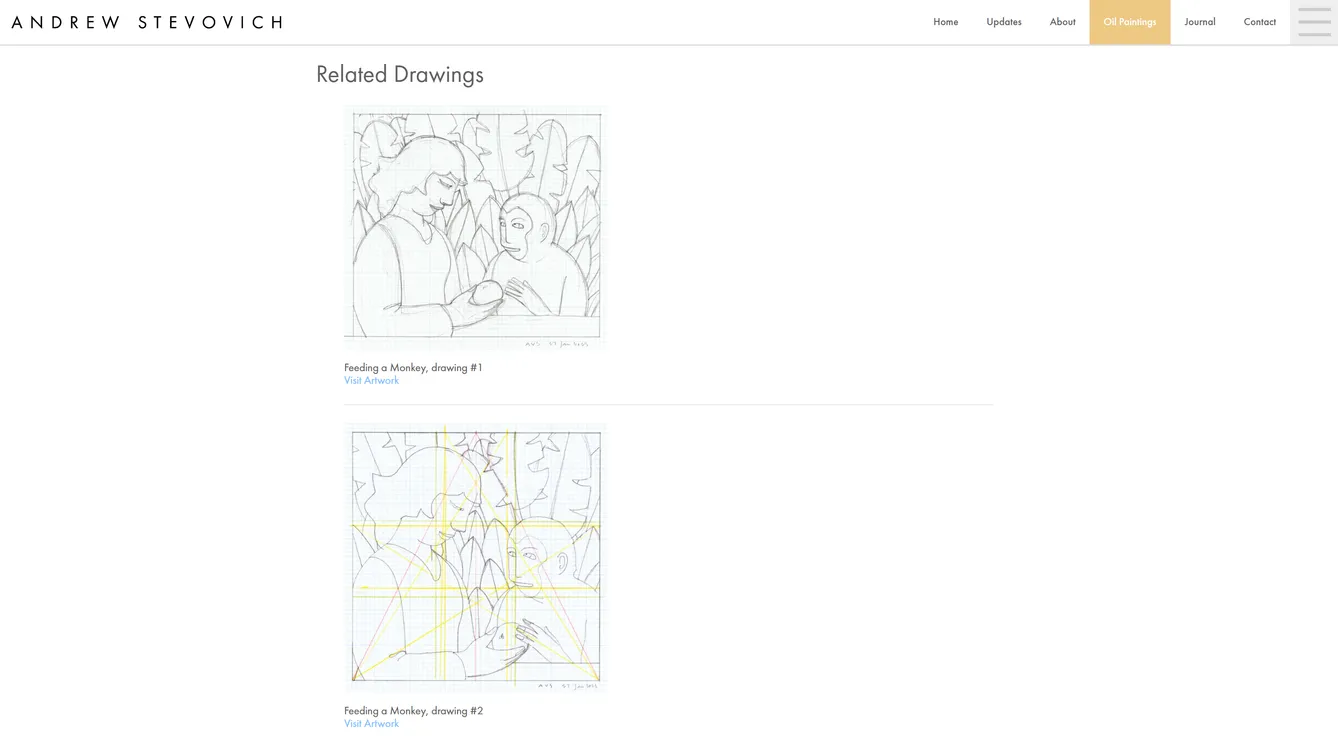
- Andrew Stevovich Website — Artwork Page (Releated Drawings)
- Client: Andrew Stevovich
- Visit figure page
Architecture
The service includes a full back-end server, a custom-designed front-end, and an adaptable database schema tuned specifically for catalogue raisonné workflows.
The system is built for:
• High-fidelity image presentation • Chronological and thematic browsing • Cross-referenced records • Long-term maintainability
Every component — from artwork pages to relational links — is crafted with typographic clarity and museum-grade design.
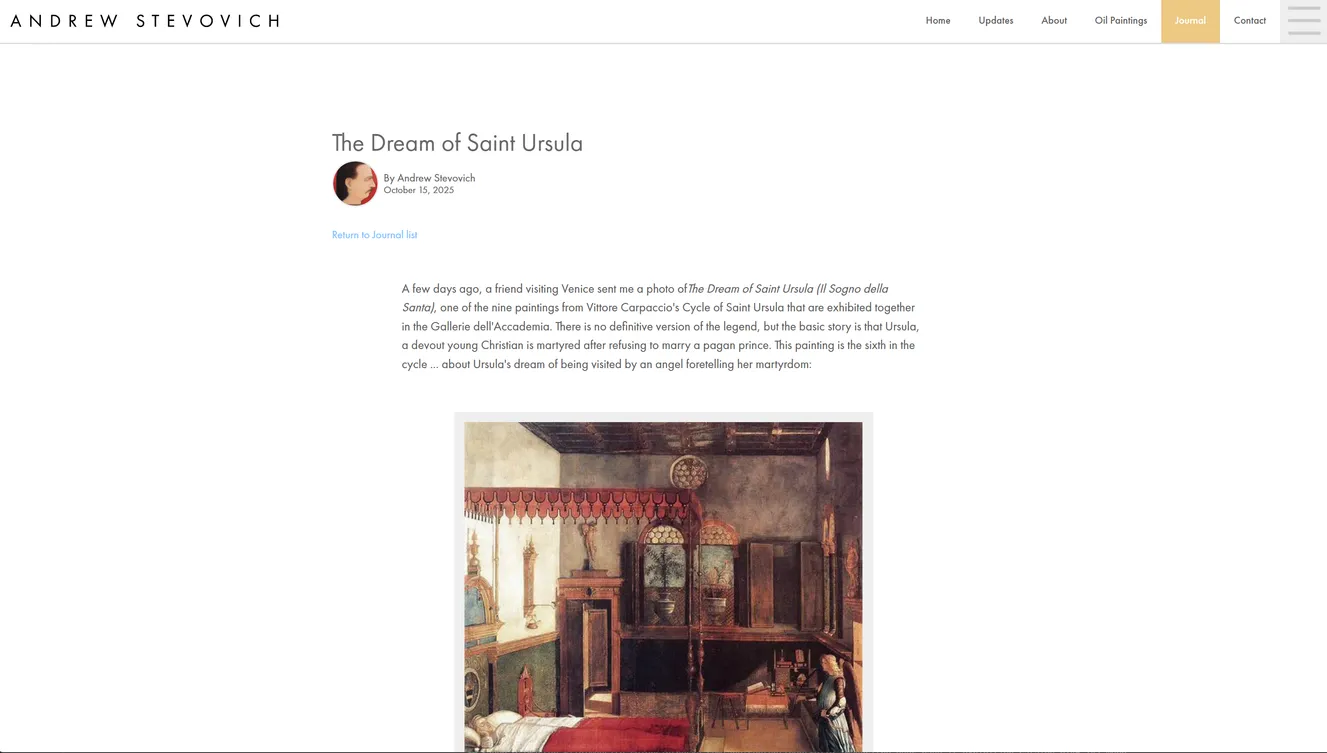
- Andrew Stevovich Website — Blog Entry Page
- Client: Andrew Stevovich
- Visit figure page
A Legacy Platform
This system is designed to function as a lasting capsule: a stable, authoritative home for an artist’s complete body of work.
It is structured so that future generations — curators, scholars, collectors, and family — can reference the work without fear of data loss, link rot, or technological obsolescence.
The goal is longevity: preserving an artist’s vision, chronology, and legacy with academic precision.
Data Complexity & Project Realities
The most significant challenge in any catalogue raisonné project is not the technology — it is the data itself.
Establishing a complete historical record requires locating photography, verifying provenance, organizing materials, and standardizing decades of archives. The system is designed to support this process, and I can assist with data management, but the scope varies greatly from artist to artist.
Data preparation often becomes the largest portion of the work, while the platform itself remains flexible and ready to receive whatever material exists.